The time has come for me to reflect on my journey through this module.
Over the last ten weeks, this module has definitely forced me to reflect upon the digital world we live in. I often take for granted the access we have to such advanced digital means and forget how dependant we all are on technology for every aspect of our lives.
I have broadened my knowledge surrounding many topics throughout this course, however the one that has really stuck with me is the topic of Intelligent Augmented. I found this discussion by far the most thought provoking.
Before I started this module, I had a very clear picture of our future world. In my mind it was shaped by technology taking over humans, particularly in our world of work. However, through learning about Intelligence Augmented (IA) I now believe the future should be about humans learning to adapt to use technology to enhance the work we are already doing.
My first blog post allowed me to explore my interest in IA as I looked at how a doctor’s life will be changed by technology in the near future.
I think this topic particularly resonates with me because it is very relevant to my life going forward. In September, I will start an Investment consultancy graduate job at Aon. Aon already have exceptional use of technology throughout their company for example their use of digital technologies allowing meetings to occur in an online space with colleagues from all over the world. This allows the most talented workers in the company to come together to develop ideas despite distance separating them.
There is no doubt Aon will continuously develop their digital business model, and with this I will also have to adapt. I need to ensure I am a lifelong learner, willing and able to adjust to whatever technology is introduced in my future career, something I feel this Module has instilled in me.
Technology in a time of uncertainty…
For me, the online style in which this module is taught has been eye opening to how technology can almost save us from times of potential disaster.
When the world is faced with adversity, such as in this current Covid-19 pandemic, it is the digital world that allows us to continue.
Technology has reached a point, where being in an office is no longer essential because one can work from home just as easily.
Adapting to new circumstances isn’t always easy but it is always necessary, especially in times like this.
The most important message I take away from this module is that:
Lifelong learning, is the key to success.
Word Count: 432
Below is a video highlighting my main reflections with regards to my learning from reading and commenting on others blogs and my participation throughout the online module.
Essentially, Airbnb is an accommodation booking engine that ‘connects people who have space to spare with those who are looking for a place to stay’ (Airbnb, 2020).
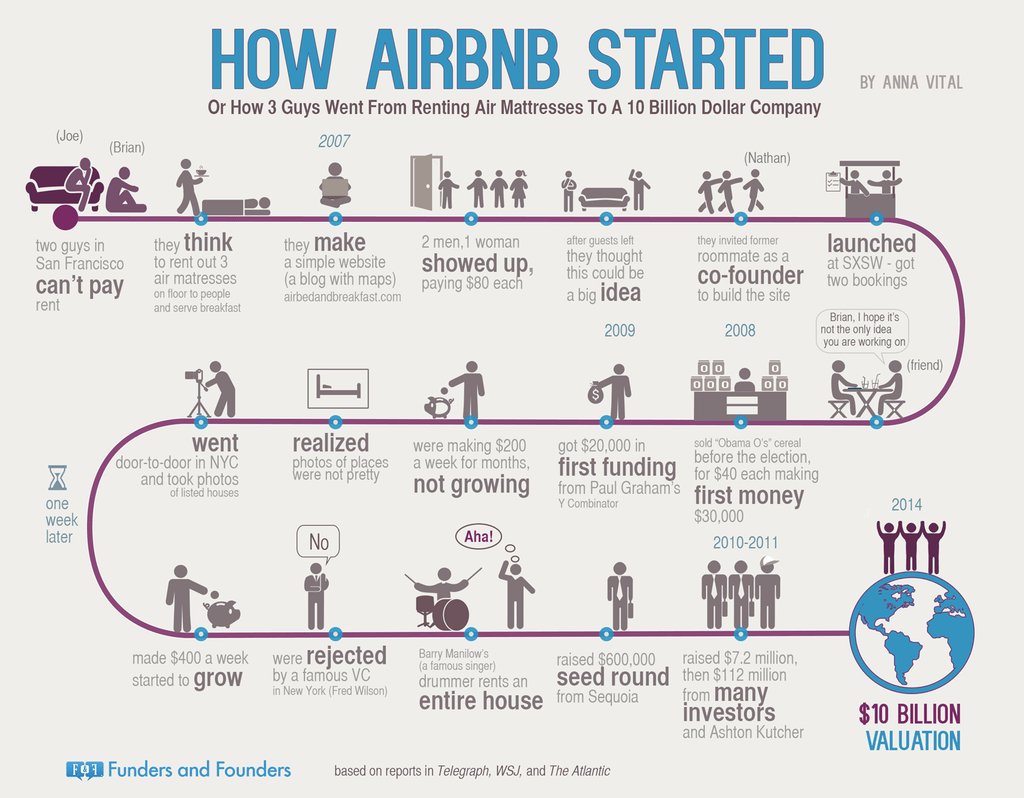
The company started in 2008 when three friends realised, they could make quick cash by renting out an air mattress in their San Francisco apartment. This simple idea evolved into a website that they coined ‘Air Mattress Bed and Breakfast’ (Al-Saad, 2019) offering travellers a cheaper alternative to a hotel stay.
One year in and they were stuck on just $200 a week. This is when they realised the pictures on their website just weren’t inviting. The three friends therefore went to every listing they had in New York and took photos of the accommodation. One week later they doubled their revenues to $400 a week and this exponential growth has never stopped! (Al-Saad, 2019).
Ten years, multiple investment injections and a name change (to simplified ‘Airbnb’) later and they now have 1.5 million properties in over 190 countries and an annual revenue of $3.6 billion (Craft, 2020).
Without a doubt, Airbnb is one of the most successful start ups of the century and their digital business model lies at the core of its success.
Let’s get digital…
Airbnb is made up of an entirely digital business model.
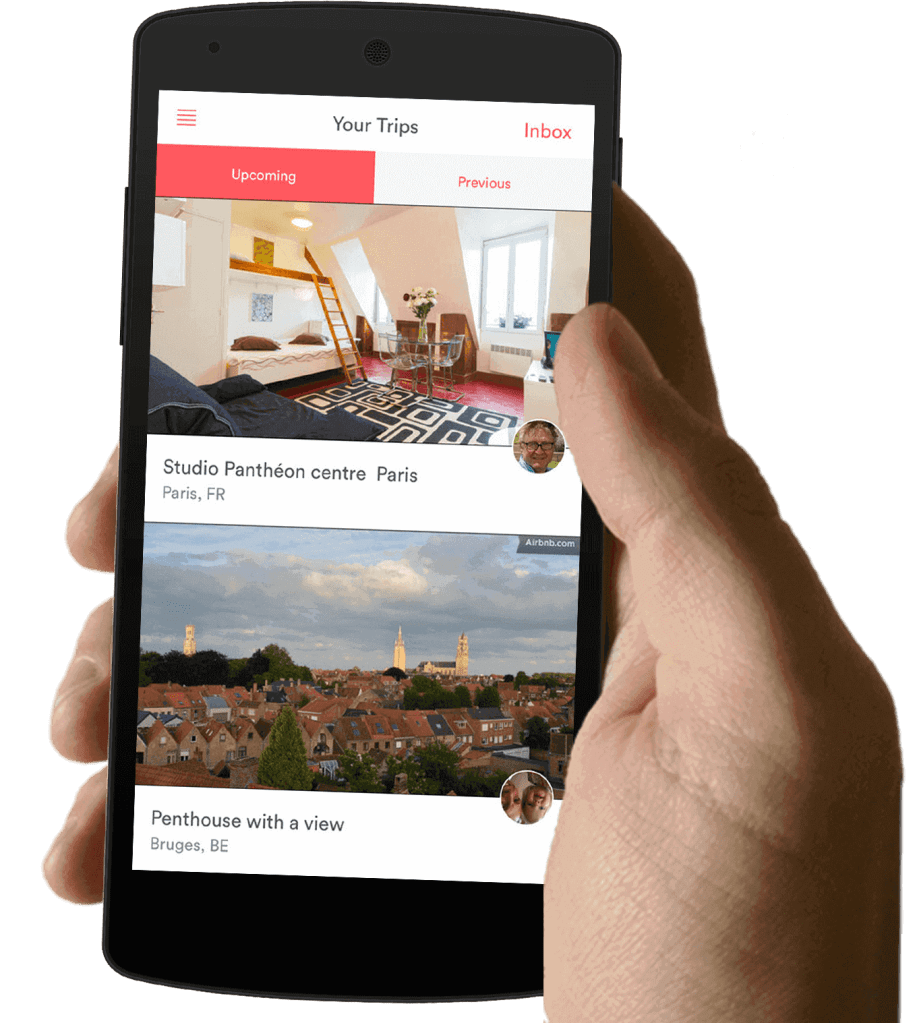
The company’s services are accessed solely through the mobile app and website. There are no booking agents or front desk receptionists to call.
Every booking on this app incurs a booking fee, and this charge goes straight into Airbnb’s pocket. Simple right!
Sharing is caring…
Unlike the typical ‘big players’ in this industry, Airbnb do not own a single piece of real estate – no hotel, no apartment – NOTHING!
Their digital model is built on the concept of the ‘Sharing Economy’, providing a platform enabling people to share their under used assets (Bocker & Meelen, 2017).
Why is their digital business model SO sucessful?
Disruptive Innovation
Airbnb’s entirely digital approach was new, exciting and certainly disruptive. The platform offers accommodation in ‘unique’ (Gallagher, 2017) locations, appealing to consumers wanting a local experience with a cheaper price tag. Innovation that the hotel industry just can’t keep up with.
Their entirely digital approach saves them money in owning real state. Take Thomas Cook as an example, their outdated business model of expensive to run, high-street agents was one of the reasons they went bust (Hancock, 2019). Airbnb will never face this risk.
Its as easy as ABC
The digital platform is simple, and simplicity is the key to success. When a user opens the app, they enter where they want to go and the dates they are interested in and VOILA – all available places appear. The simplistic design appeals to all generations; prioritising both ease and speed for a population who demand all questions answered at the click of a button.
Connected lives
People today have a desire for all aspects of their life to be interconnected (Dell Technologies, 2019). Airbnb encompass this mega-trend allowing users to have their entire accommodation and experience days itinerary on their phone in the pocket, accessible in just a few seconds.
A personal touch
Their use of analytics through complex algorithms allows their model to incorporate an element of personalisation. When a customer logs into their site, their homepage displays recommendations for their stays, making customers feel as if someone is caring for them, despite no humans being involved.
What is next for their digital model?
The latest feature is ‘Smart Pricing’ which uses big data analytics to help hosts determine a price based on market popularity, seasonality and listing popularity etc. This will help hosts keep prices competitive as demand in their area changes (Airbnb, 2020). This feature could drive more hosts to use Airbnb hence mean further sucess for this company.
Joe Zadeh, VP of Product at Airbnb, on what Smart Pricing is and why it is so important.
Simplicity is the key to success
Airbnb’s digital sharing market for accommodation has revolutionised the hospitality industry.
Its digital business model is made up of complex models, yet the interface with users is extremely simplistic.
This simplicity makes it unique and ultimately allows the company to reach success levels that are unparalleled throughout the rest of the hospitality industry.
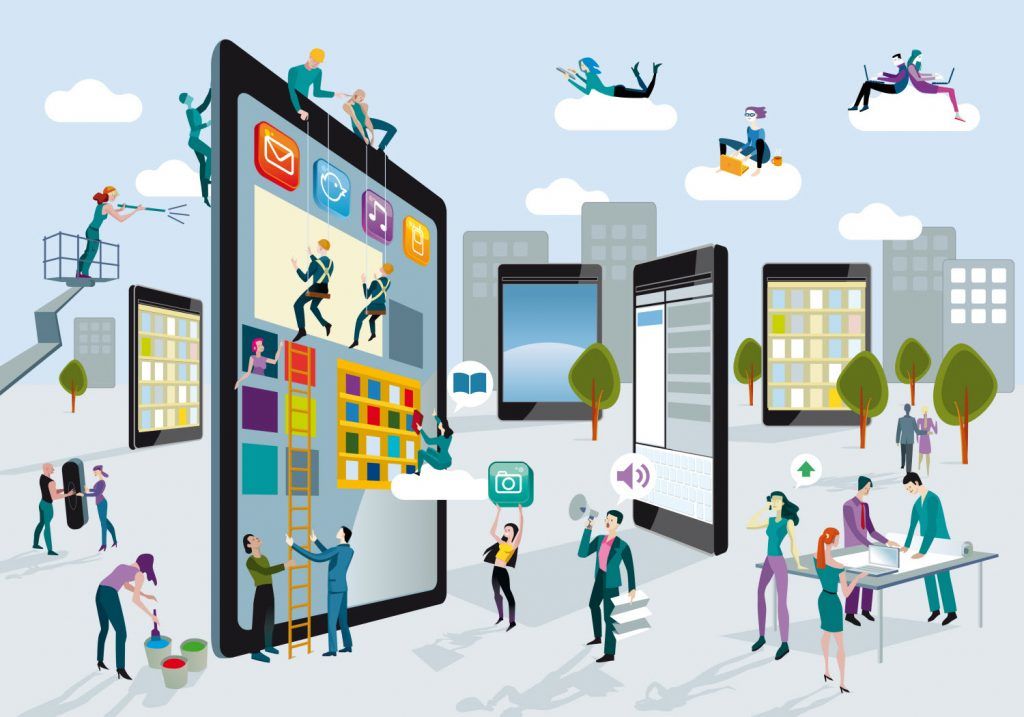
We are living in a world dictated by technology. A digital revolution where advanced technologies are becoming more integrated into our daily lives.
It is no surprise that our world of work is changing. Jobs are being lost as well as created and careers that are fundamental to our survival, such as doctors, face drastic changes in everyday roles.
This is the fourth industrial revolution.
Let’s delve deeper into the digitalisation of Doctors work life.
The Online GP
We all know the NHS faces a huge burden. It is therefore no surprise that patients are turning to technology to address their health issues. 1 in 4 patients are now using online methods to get quicker access to help from GP services (GK, 2018)
The NHS has embodied this technological innovation and patients can use video calls with their GP to have their illnesses diagnosed. This has the capability to minimise the immense pressure on the current systems however the fundamental job roles of GPs will change.
Will ‘The ‘Online GP’ be created with a sole role of dealing with online appointments?
Are the skills required for an online appointment different from the skills used in a face-face appointment?
Will current GPs be able to adapt to this video calling technology?
Ensuring patients feel comfortable to reveal their health issues over the internet is a challenge GPs will have to overcome. GPs will need to learn to show more body language in a video appointment to ensure the patient knows they are actively listening (Merrifield, 2018).
Estimations show that humans are able to easily adapt to new technology until we are 35 (Anderson & Perrin, 2017) however, after this we struggle to learn and get to grips with new technological innovations. This might mean that GPs over 35 struggle to embody this change. However, video calling is not a novel invention, therefore 35+ year olds might be able to embrace this change and adapt their skill set adequately to be successful, yet older doctors, perhaps ages 55+ might still struggle.
This discussion leaves one questioning, how more advanced technological innovations, might impact the older generation of doctors.
Anytime, Anywhere Medical Records
GPs are not the only ones experiencing changes to their daily job roles. Doctors working in hospitals are also facing drastic changes…
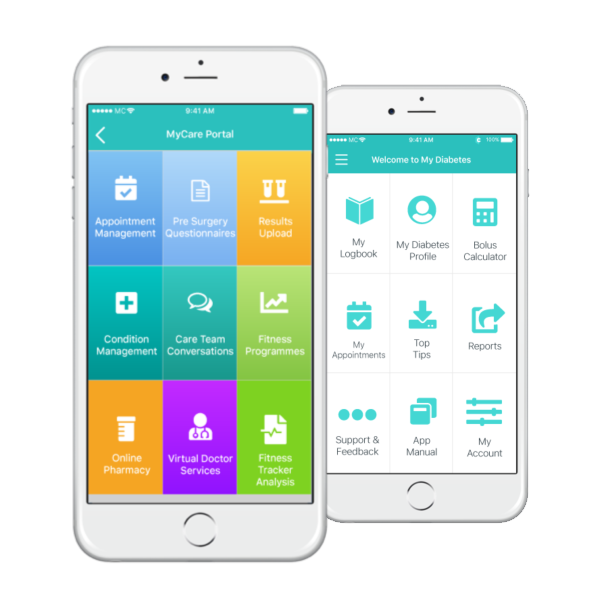
The days of logging details onto different systems and tracking down paper notes have ended. Patients health records have been digitalised by the MyCare app at the Royal Devon and Exeter Hospital, making them accessible anytime and anywhere. This change means doctors now carry tablets to log the details of patients care (Royal Devon and Exeter NHS, 2018)
Again, this begs the question of whether older doctors will successfully adapt to this technological introduction when they are used to the ‘old-fashioned’ pen and paper?
Will Robots Take Over?
The clip above shows how robots are being controlled remotely by doctors to take ‘the human hand to the next level’. More than 6 million surgeries have now been performed with this robotic system since 1999 (Intuitive, 2020).
The robot allows the doctor to perform surgeries with advanced instruments and a higher definition view of the procedure making it minimally invasive (Intuitive, 2020).
Doctors will need to learn to operate these robots. Perhaps this needs to be incorporated into the training of medical students today.
This really highlights the question:
How will the current skills of doctors need to adapt and evolve to encompass new technological innovations?
Is the ‘Digital Doctor’ the future?
With the increasing pressure on the NHS, Artificial Intelligence (AI) could provide a respite. AI could give accurate diagnosis and recommended treatment based on objective evaluation of all data and medical records (Liu, 2018).
But is this what we really want?
AI cannot mimic the empathy and comfort provided by a human, something that will always be desired from patients. Even if machines are able to learn emotional intelligence:
Do we honestly think humans will ever feel comfortable with a machine being the first ‘person’ to tell them they have cancer?
With the burden on the NHS, there is no question that technology is required to eliminate pressure on our doctors. The solution, is not the continuous pursuit of AI to replace doctors but Intelligence Augmented.
The future for our doctors should be using machines, robots and video appointments to compliment their existing roles and remove inefficiencies.
For example, in 5 years, doctors will be using AI machines to narrow down their patients from those who don’t just have the flu, to those who really need the help of a face-face appointment. Surgeons will be using the da Vinci Robots for every surgery to reduce the recovery time for their patients so they don’t take up valuable bed space in hospitals for too long.
It’s called Life-Long-Learning
It is inevitable that our daily jobs roles will continue to evolve in parallel with technological developments in the future. Therefore, not only doctors, but all humans in jobs need to adopt the new skill of life-long learning. It is pivotal that we are willing to learn, not just whilst at school or throughout training, but throughout our entire careers.
This is the fourth industrial revolution. And there are no signs it will slow down any time soon…
References
Anderson, M., & Perrin, A. (2017). Barriers to adoption and attitudes towards technology. Pew Research Centre.
GK. (2018). The rise of Digital Doctors, The Changing face of UK health tech provision. GK Strategy.
Liu, X. (2018). Time to regenerate: the doctor in the age of artificial intelligence. The Royal Society of Medicine, 113-116.
Merrifield, N. (2018, August 31). How technology is chnaging the GP consultation . Pulse.
Royal Devon and Exeter NHS . (2018). My Care Programme. Clinical Transformation enabled by a comprehensive electronic patient record (EPR). Exeter: NHS Foundation Trust.
My name is Caitlin and I am currently studying for my Masters Degree in International Management.
For the last three years I have studied Biology, however with a career planned in the world of business and finance, I decided this Masters programme would be an excellent stepping stone into my future career.
So why have I set up a blog?
This blog will primarily be used for displaying my work I am doing for my module ‘Digital Business Models’ where I will be mainly focusing on how particular jobs and industries have changed due to the digital economy and how they might change going into the future.
I have never blogged before so lets see how this goes!





 Let's Get Digital