It’s the year 2020.
We are living in a world dictated by technology. A digital revolution where advanced technologies are becoming more integrated into our daily lives.
It is no surprise that our world of work is changing. Jobs are being lost as well as created and careers that are fundamental to our survival, such as doctors, face drastic changes in everyday roles.

This is the fourth industrial revolution.
Let’s delve deeper into the digitalisation of Doctors work life.
The Online GP
We all know the NHS faces a huge burden. It is therefore no surprise that patients are turning to technology to address their health issues. 1 in 4 patients are now using online methods to get quicker access to help from GP services (GK, 2018)

The NHS has embodied this technological innovation and patients can use video calls with their GP to have their illnesses diagnosed. This has the capability to minimise the immense pressure on the current systems however the fundamental job roles of GPs will change.
Will ‘The ‘Online GP’ be created with a sole role of dealing with online appointments?
Are the skills required for an online appointment different from the skills used in a face-face appointment?
Will current GPs be able to adapt to this video calling technology?
Ensuring patients feel comfortable to reveal their health issues over the internet is a challenge GPs will have to overcome. GPs will need to learn to show more body language in a video appointment to ensure the patient knows they are actively listening (Merrifield, 2018).
Estimations show that humans are able to easily adapt to new technology until we are 35 (Anderson & Perrin, 2017) however, after this we struggle to learn and get to grips with new technological innovations. This might mean that GPs over 35 struggle to embody this change. However, video calling is not a novel invention, therefore 35+ year olds might be able to embrace this change and adapt their skill set adequately to be successful, yet older doctors, perhaps ages 55+ might still struggle.
This discussion leaves one questioning, how more advanced technological innovations, might impact the older generation of doctors.
Anytime, Anywhere Medical Records
GPs are not the only ones experiencing changes to their daily job roles. Doctors working in hospitals are also facing drastic changes…
The days of logging details onto different systems and tracking down paper notes have ended. Patients health records have been digitalised by the MyCare app at the Royal Devon and Exeter Hospital, making them accessible anytime and anywhere. This change means doctors now carry tablets to log the details of patients care (Royal Devon and Exeter NHS, 2018)
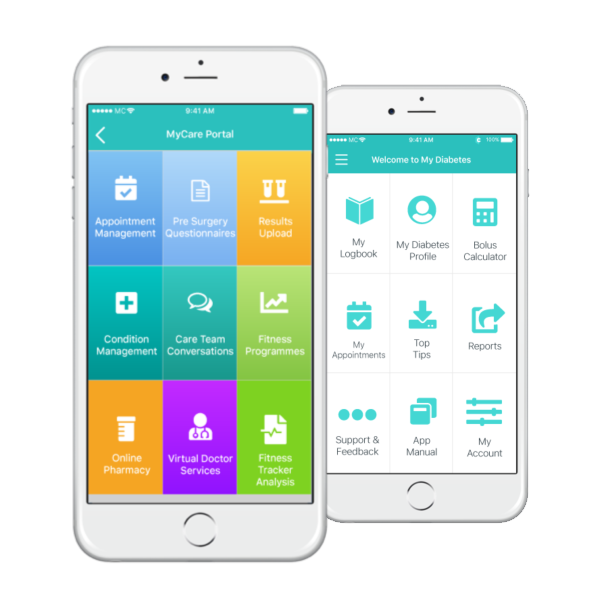
Again, this begs the question of whether older doctors will successfully adapt to this technological introduction when they are used to the ‘old-fashioned’ pen and paper?
Will Robots Take Over?
The clip above shows how robots are being controlled remotely by doctors to take ‘the human hand to the next level’. More than 6 million surgeries have now been performed with this robotic system since 1999 (Intuitive, 2020).
The robot allows the doctor to perform surgeries with advanced instruments and a higher definition view of the procedure making it minimally invasive (Intuitive, 2020).
Doctors will need to learn to operate these robots. Perhaps this needs to be incorporated into the training of medical students today.
This really highlights the question:
How will the current skills of doctors need to adapt and evolve to encompass new technological innovations?
Is the ‘Digital Doctor’ the future?
With the increasing pressure on the NHS, Artificial Intelligence (AI) could provide a respite. AI could give accurate diagnosis and recommended treatment based on objective evaluation of all data and medical records (Liu, 2018).
But is this what we really want?

AI cannot mimic the empathy and comfort provided by a human, something that will always be desired from patients. Even if machines are able to learn emotional intelligence:
Do we honestly think humans will ever feel comfortable with a machine being the first ‘person’ to tell them they have cancer?
With the burden on the NHS, there is no question that technology is required to eliminate pressure on our doctors. The solution, is not the continuous pursuit of AI to replace doctors but Intelligence Augmented.
The future for our doctors should be using machines, robots and video appointments to compliment their existing roles and remove inefficiencies.
For example, in 5 years, doctors will be using AI machines to narrow down their patients from those who don’t just have the flu, to those who really need the help of a face-face appointment. Surgeons will be using the da Vinci Robots for every surgery to reduce the recovery time for their patients so they don’t take up valuable bed space in hospitals for too long.
It’s called Life-Long-Learning
It is inevitable that our daily jobs roles will continue to evolve in parallel with technological developments in the future. Therefore, not only doctors, but all humans in jobs need to adopt the new skill of life-long learning. It is pivotal that we are willing to learn, not just whilst at school or throughout training, but throughout our entire careers.
This is the fourth industrial revolution. And there are no signs it will slow down any time soon…
References
Anderson, M., & Perrin, A. (2017). Barriers to adoption and attitudes towards technology. Pew Research Centre.
GK. (2018). The rise of Digital Doctors, The Changing face of UK health tech provision. GK Strategy.
Intuitve. (2020, February 09). Da Vinci Products and Services. Retrieved from Intuitive: https://www.intuitive.com/en-us/products-and-services/da-vinci/systems
Liu, X. (2018). Time to regenerate: the doctor in the age of artificial intelligence. The Royal Society of Medicine, 113-116.
Merrifield, N. (2018, August 31). How technology is chnaging the GP consultation . Pulse.
Royal Devon and Exeter NHS . (2018). My Care Programme. Clinical Transformation enabled by a comprehensive electronic patient record (EPR). Exeter: NHS Foundation Trust.
Picture 1 (Digital Doctor) Source: Source: https://www.primafelicitas.com/doctors-medical-practitioners-hospitals-need-digital-marketing/
Picture 2 (Online GP) Source: https//www.which.co.uk/news/2019/01/are-online-gps-the-future-of-healthcare/
Picture 3 (My Care) Source: https://www.carbonlabs.co.uk/mycare.html
 Let's Get Digital
I found your discussion around GPs that over 55 would struggle to adapt their skill sets to new technological platform for consultations with patients. I discovered that there has been growth in the proportion of the GP workforce aged 55 or over. From 2015 to 2019, the number of GPs aged over 55 grew from 20.3% to 23.6% (Bostock, 2019). This would suggest that there will likely be an increasing number of GPs that are not able to adapt and provide patients with adequate health advice.
What do you think the healthcare system can do to overcome this problem, as the reliance on GPs aged 55 and over increases?
I also found your “Digital Doctor” point insightful especially in light of recent events of the spread of the Coronavirus. Public Health England have advised those who are showing symptoms to self-isolate themselves and call the NHS emergency line for advice. However, a nurse has criticised this advice as she had to wait 15 hours to receive advice from NHS 111 after showing symptoms (BBC, 2020). The use of technology and robotics could be extremely useful in cases like the Coronavirus. Human contact has led this virus to spread and kill thousands around the world, therefore if a human doctor could remotely operate a robot that could assess a patient, minimising the likelihood of spread, then future pandemics may be minimised.
Sources:
Bostock, N. (2019) GP workforce increasingly fragile as reliance on older doctors grows. Retrieved 17 February 2020 from: https://www.gponline.com/gp-workforce-increasingly-fragile-reliance-older-doctors-grows/article/1586344
BBC. (2020) Coronavirus: More may need to self-isolate to stop spread – NHS boss. Retrieved 17 February 2020 from: https://www.bbc.co.uk/news/uk-51486131
LikeLike
Interesting read Caitlin. I found the section on robot-assisted surgery very engaging- the power of this technology is simply mind-blowing, and I have no doubt that this is what the future of surgery looks like.
This is an excellent example of where I feel digital technologies should be used and can provide real value. The benefits of using robotic systems for surgery (i.e. shorter hospitalisation periods, greater precision and minimal scarring) far outweigh any drawbacks. On the other hand, you also talk about the use of AI for diagnosis purposes. I have some reservations about this concept. Of course, it has the potential to provide a huge assistance to doctors, but I ultimately feel like the empathy of another human will always be needed in such situations.
Your comment on the potential incorporation of robot-assisted surgery into the programme for medical students was particularly thought-provoking. Medicine is already an incredibly stressful profession- one study reported that 78 percent of US physicians experience burnout (The Physicians Foundation, 2018). Could the additional burden of having to learn how to operate these intricate technologies add even more emotional stress? This feels particularly pertinent for students- how many years of further study will this add to an already gruelling study regime? Could this put off prospectus surgeons and doctors?
Reference:
The Physicians Foundation. (2018). 2018 Survey of America’s Physicians: Practise Patterns & Perspectives. Retrieved February 18, 2020 from https://physiciansfoundation.org/wp-content/uploads/2018/09/physicians-survey-results-final-2018.pdf
LikeLike
Hi Caitlin, that was a really fascinating read, thanks for taking the time to write it. I found your discussion on the use of AI to assist GP’s in their regular roles particularly peaked my interest, so I have done a bit of reading around the subject myself.
I think you are right in saying that the role of a GP will not be fully taken over by AI anytime soon. One of the primary reasons for this is that machine learning algorithms need thousands of digitised examples of a problem before they can properly learn to produce the desirable answer (Data Revenue, 2020). AI, at least in their current form, cannot read a book and learn the answer from that alone. This means that currently the application with the most potential for AI would be in reading and assessing common scan data such as MRI, CT, X-ray, ECG etc. This alone would save huge amounts of time and money, and would hopefully improve accuracy of results.
The AI would be able to assess a scan in a fraction of a second, and importantly would be able to do this to scans from anywhere in the world. It may soon be the case that everyone in the world has access to the same cheap, instant, and top quality diagnosis facilities.
Whilst this is all very promising I found a literature review (Amisha, Malik, Pathania, & Rathaur, 2019) that suggested there is a still long way to go in properly developing these tools. For example one study they referenced found that even the best AI-based algorithms when applied to 650,000 mammography scans, were only approximately as good as the bottom 10% of radiologists.
References:
Amisha, Malik, P., Pathania, M., & Rathaur, V. (2019). Overview of artificial intelligence in medicine. Journal of Family Medicine and Primary Care, 2328-2331.
Data Revenue. (2020, 02). Artificial Intelligence in Medicine. Retrieved from datarevenue.com/: https://www.datarevenue.com/en-blog/artificial-intelligence-in-medicine
LikeLike
Hi, Caitlin. For GP part, I like how you analyze the technical adaptation problem from the perspective of age. As you said, digital disruption is a challenge for some doctors to overcome. Based on your question, I think skills required for online appointment and face-face appointment are not much different for doctors, because online platform is just one of the auxiliary tools derived from the development of technology in the new era, it can’t change the essence of the doctor roles.
For the last part, you mentioned that in five years, doctors should use AI to improve work efficiency. However, I think when considering this issue, we should think about generic medical issues. For example, the problem with most patients is long waiting time rather than the success rate of the operation. Therefore, for the future direction, perhaps the practical problems in the operation are secondary to the digital transformation.
LikeLike
I really enjoyed this blog post – your discussion regarding “the online GP” was very interesting. Contacting doctors from home is useful for those facing accessibility issues e.g. disabled people. However, a family member to help app navigation may be necessary for those that struggle adapting to new technologies. Thus, usability is extremely important.
I would suggest all doctors must be comfortable with innovation. As highly educated individuals, keeping up to date with the latest medical knowledge is paramount. Although some doctors may exhibit reluctance toward this form of consulting, I am sure they can adapt.
Your discussion surrounding “Will Robots Take Over?” was interesting and insightful. However, I am concerned robotic surgery will be too expensive for hospital implementation. The NHS is facing a financial crisis so it might be difficult for widespread implementation around the UK. Perhaps private hospitals will be the first to take lead?
LikeLike